Review: Green Watercolor Christmas Sublimation Design
As a designer who has spent years digitizing and reviewing embroidery assets, I have learned that not every pretty picture translates well into thread. The gap between a digital Illustrations file and a tangible finished product is where many projects succeed or fail. Recently, I evaluated the Green Watercolor Christmas Sublimation design to determine its viability for real-world application. This is not just about aesthetics; it is about functionality, stitchability, and commercial potential for Etsy sellers and craft business owners.
First Impressions and Visual Mood
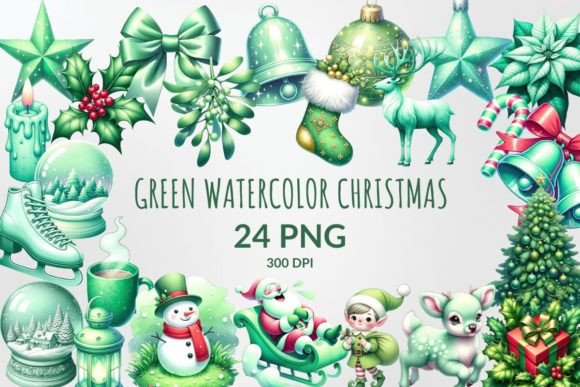
The immediate appeal of Green Watercolor Christmas Sublimation lies in its soft, organic aesthetic. Unlike traditional, rigid holiday graphics, this design carries a gentle, artistic mood. The watercolor effect suggests warmth and nostalgia, which is highly desirable for modern holiday decor. For an embroidery designer, the challenge here is interpreting those fluid, blended edges into discrete stitches. If you are looking for a machine embroidery design that feels hand-painted rather than digitally manufactured, this concept hits the mark. However, the visual personality requires careful handling. The lack of hard outlines means the design relies heavily on color contrast and texture to define its shape. This makes it ideal for projects where subtlety is preferred over bold, graphic statements.
Real-World Application: The Holiday Tote Scenario
To test the practicality of this asset, I envisioned a specific use case: a custom tote bag design for a local boutique’s holiday gift-with-purchase campaign. The goal was to create a handmade product that felt upscale yet approachable. Using Green Watercolor Christmas Sublimation as the central motif on a natural canvas tote offers a sophisticated look. The green tones complement the neutral fabric beautifully, avoiding the cliché bright reds and greens often seen in mass-market items.
In this scenario, the design acts as a focal point without overwhelming the bag’s utility. Customers reacting to such a item are likely to perceive higher value due to the artistic nature of the print. It moves beyond simple merchandise into the realm of personalized gift territory. For small shop product lines, this kind of visual storytelling helps build brand consistency. It signals that the creator cares about design details, which fosters customer trust and engagement. Whether used on aprons, pillow covers, or tea towels, the design’s versatility allows it to adapt to various home goods while maintaining a cohesive holiday theme.
Performance on Different Fabrics and Garments
When considering custom apparel, such as a sweatshirt embroidery project, the substrate matters immensely. The soft blends of the watercolor style perform best on smooth, tight-weave fabrics. On a fleece sweatshirt, the texture of the fabric can interfere with the finer details of the design. If the stitch density is too low, the fabric pile may obscure the image. Conversely, if the density is too high, the garment may become stiff and uncomfortable. For baby embroidery items, such as onesies or blankets, the design’s gentle appearance is perfect, but the backing and stabilizer choice becomes critical to ensure softness against sensitive skin.
For curved surfaces like caps or hats, caution is advised. Watercolor effects often rely on gradual color transitions. On a structured cap, distortion during stitching can break up these gradients, making the design look pixelated or disjointed. In such cases, simplifying the design or using it as a smaller accent rather than a full-frontal graphic might yield better results. Similarly, on stretchy fabrics, proper stabilization is non-negotiable to prevent the design from warping after washing.
Technical Considerations for Embroiderers
From a technical standpoint, working with a design inspired by watercolor requires a keen eye for thread colors. Since the original art likely uses subtle shading, selecting the right thread palette is crucial. You cannot simply pick one shade of green; you need a gradient of threads to mimic the watercolor bleed. This increases the complexity of the embroidery project. Before committing to a large production run, always test the design on scrap fabric. Check how the fill stitch interacts with the satin stitch borders, if any are present. Some watercolor-style designs use running stitches for detail, which can get lost on textured materials.
It is also vital to review the hoop size requirements. If the design is large, ensure your machine can handle the dimensions without excessive re-hooping, which can lead to alignment issues. For those using this as a sublimation transfer before embroidering around it, or as a purely printed element combined with embroidery, check the registration accuracy. Misalignment between print and stitch can ruin the professional look of the commercial embroidery piece.
Commercial Viability and Branding
For digital product sellers and creative entrepreneurs, the licensing terms of Green Watercolor Christmas Sublimation must be clearly understood. Before selling design assets or finished items, confirm whether the license allows for commercial use. Assuming it does, this design offers strong potential for holiday embroidery collections. It stands out in a saturated market because it appeals to buyers seeking modern, minimalist, or artistic holiday decor. Using it in printable mockup previews can help visualize the final product for online listings, enhancing buyer confidence.
However, be mindful of where the design might fall short. Tiny lettering or intricate corners in watercolor styles can become muddy when stitched. If the design includes text, ensure it is large enough to remain legible. For embroidered patch creations, the lack of distinct borders might require a merrowed edge or a cut-out border to maintain shape integrity. Always inspect small details at 100% zoom in your software before loading the digital embroidery file onto your machine.
Final Verdict and Practical Advice
The Green Watercolor Christmas Sublimation design is a strong contender for designers looking to add an artistic touch to their holiday lineup. Its strength lies in its mood and versatility across home decor and apparel. However, it demands respect for technical limitations. It is not a "load and go" design for beginners without some testing. To maximize success:
- Test on various fabric weights to determine optimal stabilizer usage.
- Verify thread color contrast against both light and dark backgrounds.
- Check the embroidery file for unnecessary jumps or dense areas that could cause puckering.
- Confirm licensing rights for commercial embroidery and resale.
- Consider the end-use: avoid overly complex applications on stretchy or highly textured fabrics.
In conclusion, this design offers a fresh take on holiday motifs. When executed with care, it elevates the perceived value of small business merchandise and creates memorable personalized gifts. For the experienced maker, it is a valuable addition to the library, provided you approach it with a critical eye for detail and material compatibility.